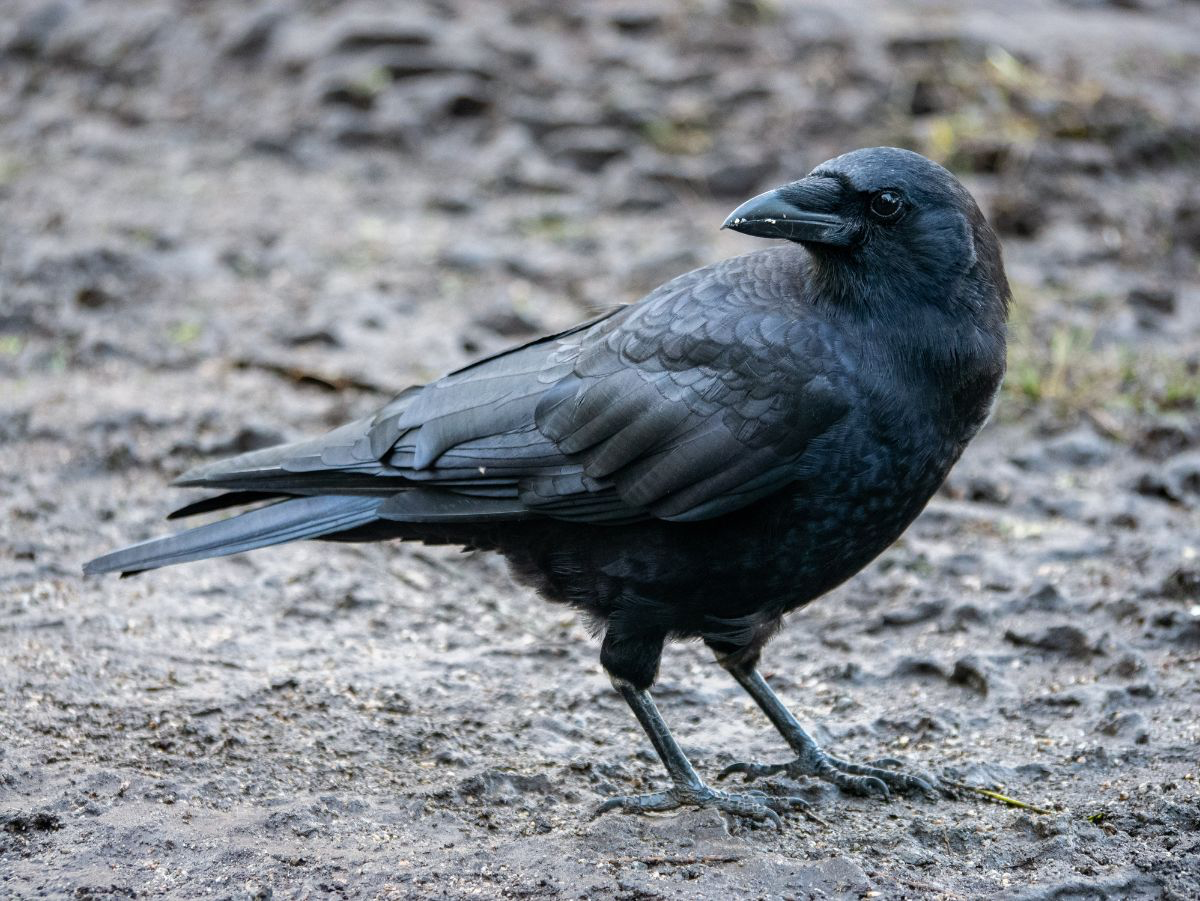
I’ve been seeing a lot of crows in my neighborhood and throughout the central eastside, so I called up Gary Granger of Portland Crow Roost, an advocacy group for crows. He used to conduct a yearly winter census of the crows that visit the city this time of year. Crows have a habit of coming to Portland in winter, possibly because cities stay a bit warmer. Usually, they bed down for the night in downtown and the Pearl District.
Do you think crows have moved to the eastside?
“They're two different major phenomena with the roost.“One is where they roost — that tends not to change very much over time. They don't eat when they come in a roost.“Before sunrise, they get up and they leave and they'll go looking for food. The crows will fly away from the city to where there's a great food supply. “So if crows find food near your neighborhood because there's a field that got turned up and there are lots of bugs or there's a dump or somebody's thrown out seed or something, they'll communicate that and more crows will come the next day and more will come the next day."
What do you want to figure out about urban roosts?
“Urban areas are not gonna go away. And if we could understand why the crows choose certain areas then we have the opportunity to create areas that would be lower conflict but are highly attractive to the crows. “To me it's just amazing. [They can sleep on] the power lines and the trees over the streetcar, over a fire truck with its lights flashing and not be bothered by that. That allows them to live in the city. "'Commensal' is the biological term — [to describe an] animal that has learned to live well with people.”
A group of crows is called a murder of crows. Do you have a better name?
“I’m not a fan of ‘murder’ because crows get denigrated. I understand where it comes from. Way back when, [during] wars and plagues, crows would clean up the dead bodies. That's not a pleasant thing to contemplate. ‘Cacophony’ comes to mind.”