For today, here’s a couple updates on local election results, including:
3 Key Races Up in the Air!
Two weeks after Election day, it’s unusual (but not unheard-of) for votes to be so close that the races can’t be called, but that’s the case in three contested races.
- Two Portland City Council races are still up in the air, as the third councilor has yet to win decisively in Districts 1 and 4: In East Portland, MusicPortland board member Jamie Dunphy has consistently led Radio Cab superintendent Noah Ernst. In the mostly westside district, Eric Zimmerman, a county commission staffer, is leading police officer Eli Arnold. [Oregonian]
- The next update will be a week from today.
- There’s a legislative race that could determine whether Democrats win a supermajority in the Legislature and that still hangs in the balance. It’s a rare case where the Oregonian appears to have called the winner too early. Democratic challenger Lesly Munoz now leads Republican Rep. Tracy Cramer. [Oregonian 🔒]
- As of yesterday, they’re separated by 104 votes. [Oregon Secretary of State]
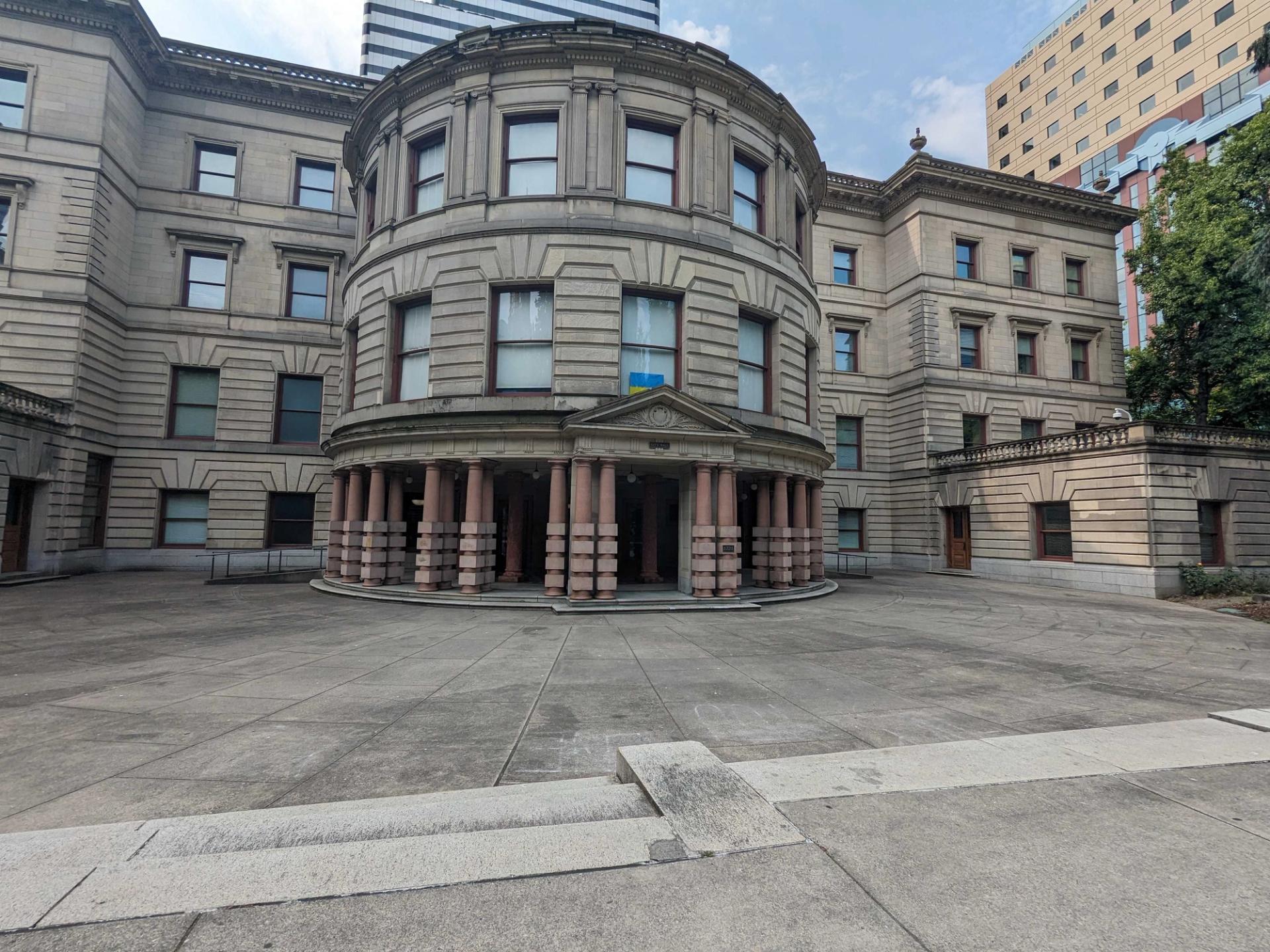
A changeover at City Hall. (Rachel Monahan / City Cast Portland)
The Early Judgment of Ranked-Choice Voting
Here are some data points on what happened with Portland City Hall’s first ranked-choice voting:
There are some signs of lower voter engagement than past general elections:
- One in five Portlanders who cast a ballot didn’t vote in any of the City Council elections. (They may have voted for president, but not for Council — for example). [Oregonian]
- In East Portland, 29% of those casting a ballot didn’t fill in the Council race. [Oregonian]
- To be fair, ranked choice voting creates the equivalent of a primary and a general election rolled into one. In the past, turnout in the primary has been lower. [Oregonian]
The first ranked-choice election drew an extraordinary number of candidates.
- You could argue that’s a sign of good civic engagement, even if it led to a possibly temporary drop in voters casting a ballot. [Portland Mercury]
Ranked choice is being credited with helping to elect a diverse Council that will include:
- At least five people of color
- Three renters
- Councilors representing the Portland gamut of political viewpoints, including three socialists
- Likely a Councilor “in every decade from their 20s to their 70s”
- Six women (out of the 12)
- Three who live east of Interstate 205 [Oregonian]
Ranked choice may not have changed the outcome of these elections: All the candidates who received the most first-place rankings appear to have won. [Oregonian]
There was one definitive indictment of ranked choice voting: Oregonians rejected Measure 117 — a statewide ballot measure to bring ranked-choice voting statewide. [Oregonian]