In the lead-up to the 1905 centennial celebration of the Lewis and Clark Expedition, Portlanders planted roses (as described in last week’s Urban Almanac).
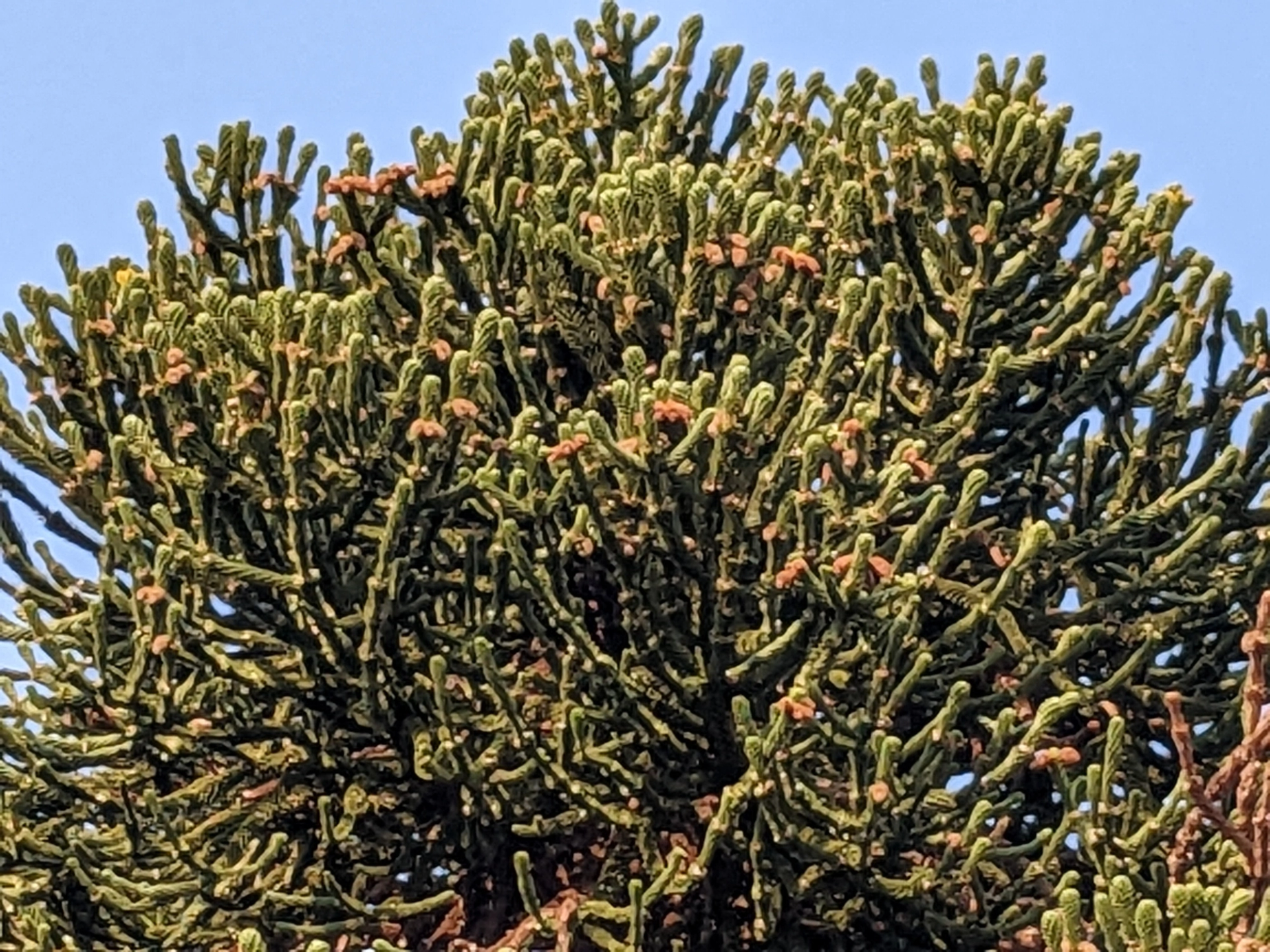
After the Expo, Portlanders planted seedlings of the monkey puzzle tree, Araucaria araucana, which the Chilean delegation distributed.
These spiny trees stick out wherever they are planted around town. And many appear to be of an age to have come from that original round of planting. (Up in the Puget Sound, they have trees about half as old from a World’s Fair round of planting.)
While rose lovers have their official societies in town, the monkey tree fan club is more unofficial. A Facebook group tracks their whereabouts. Carol Studenmund plotted the map for fellow enthusiasts. “They're charismatic trees,” Studenmund said. “They're so different, so interesting. And I just love them.” (I love that they have a fan club.)They’re the national tree of Chile, and are now officially listed asendangered.
Monkey puzzle trees come in male and female, with the rounder cones of a female producing an edible seed. They can grow to upwards of 1,500 feet and live more than a thousand years. So the ones around town are really infants in the grand scheme of things.
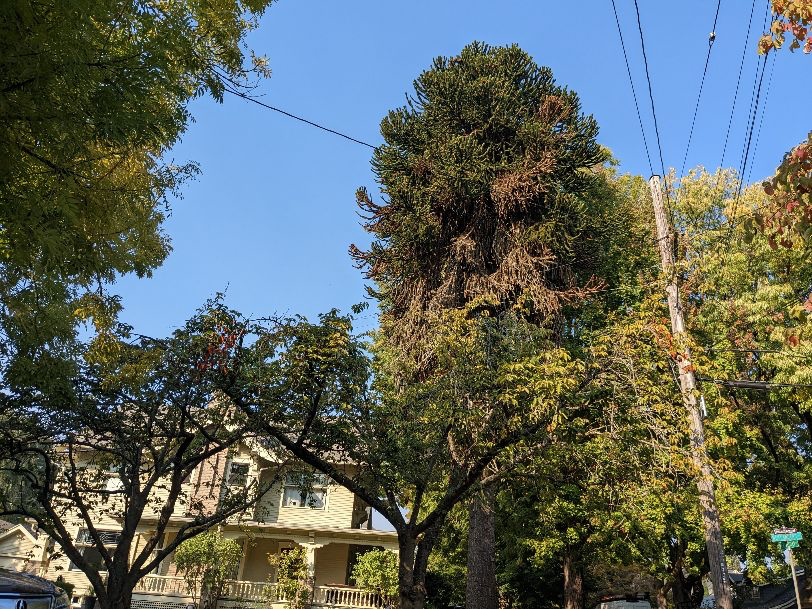
This Laurelhurst giant, a monkey puzzle, is one of the city's heritage trees. (Rachel Monahan/City Cast Portland)
Their English name comes from the shape. The spiny leaves look like the scales of reptiles and give the tree its distinctive look. They even inspired some wag (in the 1800s), who thought the tree would puzzle a monkey trying to climb it.
Their distinctive look and their special history here, means that Portlanders have grown attached to them. The threat of cutting down these trees has sometimes counted as news. When the Banfield was expanded in 1985, a monkey puzzle tree got the ax. More recently a developer wanted to chop one down and got some bad press.